

Coffee Quality Institute (CQI) introduced the Q Grader Program in 2003, it established what would become the world’s most recognized professional certification for coffee quality evaluation. At the time, the industry lacked a standardized and globally accepted system for assessing coffee quality. The Q Grader Program filled this gap by providing rigorous training and examination processes that attracted thousands of coffee professionals worldwide seeking to become certified Q Graders.
Since its introduction, the Q Grader Program has significantly contributed to the standardization of coffee grading and cupping practices across the globe. Earning a Q Grader certification has become a symbol of professional excellence, creating a global community of coffee cuppers who share a common methodology for evaluating both the physical and sensory attributes of coffee.
CQI’s mission is to improve coffee quality and the quality of life for the people who produce it.
Its vision is to create educational systems that foster self-reliance, growth, and sustainability throughout the coffee industry. By promoting a common language for coffee and encouraging the use of scientifically based methodologies across the entire coffee value chain, CQI aims to continuously elevate coffee quality worldwide.
As coffee quality improves and specialty coffees gain recognition for their distinct characteristics, producers are able to receive fair value for their work. At the same time, consumers gain a deeper appreciation for the complexity and unique qualities of specialty coffee. This creates greater demand for high-quality coffees, supporting a more sustainable and prosperous coffee sector for everyone involved.
CQI has transformed the specialty and fine coffee sectors through education, differentiation, and quality development initiatives designed to benefit coffee producers around the world.
By promoting and sustaining a shared Common Language for coffee quality, CQI enables stakeholders throughout the value chain to communicate more effectively and make informed decisions based on consistent standards.
Through a holistic educational approach that spans the entire coffee supply chain, CQI empowers producers to improve quality, enhance the market value of their coffees, and gain greater recognition for their work. At the same time, these efforts contribute to increasing consumer awareness and appreciation of specialty coffee.
CQI also plays a vital role in building and supporting market networks that connect producers, buyers, educators, and industry professionals, creating opportunities for long-term growth, collaboration, and sustainability throughout the global coffee community.
This course introduces participants to the fundamentals of sensory evaluation and explores how taste, aroma, and mouthfeel are used in the context of coffee assessment.
This hands-on class begins with foundational learning activities focused on the three key components of flavor perception: taste, aroma, and mouthfeel. Participants are introduced to standard sensory analysis tools used for aroma and flavor reference and learn how to apply them within the context of coffee quality evaluation.
The course concludes with practical coffee quality assessments and calibration exercises designed to align participants’ sensory perceptions with established flavor standards.
This course is ideal for individuals seeking an introductory-level foundation in sensory analysis for coffee, food, and beverages.
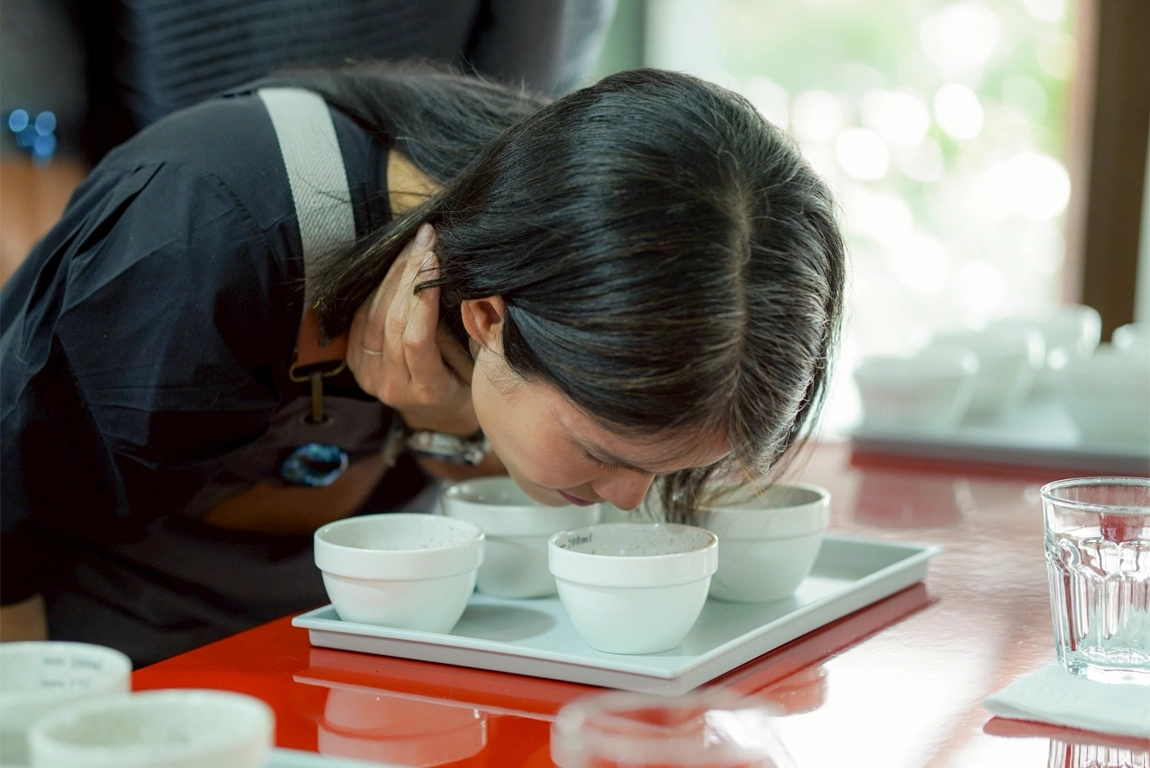
This two-day course introduces coffee professionals and enthusiasts to the principles of coffee cupping and consistent coffee evaluation using the methodologies employed by CQI Q Graders.
Participants will learn the fundamentals of olfaction, including fragrance and aroma; gustation, including taste and aftertaste; and texture, including body and mouthfeel. The course also explores sensory memory and aroma recognition, helping participants develop the skills necessary to identify, compare, and describe the characteristics of both Arabica and Robusta coffees.
In addition, participants will learn proper cupping preparation techniques, including coffee-to-water ratios, sample preparation, and cupping table organization.
Throughout the course, participants will evaluate multiple coffee sets and engage in calibration exercises to improve consistency in their assessments. By the end of the course, participants will gain a common language for discussing coffee quality and a clear pathway for further development as professional coffee tasters.
This course provides a comprehensive understanding of the CQI cupping methodology and the principles behind accurate coffee evaluation and scoring.
Designed for aspiring cuppers, the course expands participants’ knowledge of the cupping form by examining each evaluation category in detail. Participants will learn not only how to use the form correctly but also the reasoning behind each scoring component and its role in assessing coffee quality.
Through a combination of theory, practical exercises, coffee evaluations, and sensory training activities, participants develop the skills necessary to conduct consistent and reliable cupping sessions according to CQI protocols.
Upon successful completion of the course, participants will be able to demonstrate a clear understanding of the CQI cupping form and apply standardized cupping procedures with confidence and consistency.
The Q Arabica Program was the first component of the Q System developed by the Coffee Quality Institute (CQI) more than 15 years ago. Built on a simple yet powerful concept, the program aims to create a common language of coffee quality throughout the supply chain. By establishing consistent standards for quality evaluation, the program supports the improvement of coffee quality worldwide while helping producers receive recognition and market opportunities for exceptional coffees.
The Q Arabica Combo Course is delivered over six days and consists of two distinct phases.
During the first three days, participants review core concepts and theoretical foundations while engaging in intensive practical exercises covering all areas of the Q System. These sessions are designed to strengthen technical skills and prepare participants for the qualification process.
The second three-day phase consists of the official examinations. Participants complete more than 20 assessments across nine modules, each designed to evaluate competencies required for professional coffee quality assessment.
Examination modules include cupping methodology, olfactory and gustatory sensory skills, green coffee defect identification, roast classification, organic acid matching, and sensory discrimination. Participants are also assessed on their ability to identify and evaluate CQI Flavor Standards presented in aqueous solutions.
The Q Arabica Combo Course provides a comprehensive framework for developing the knowledge, sensory skills, and calibration necessary to evaluate Arabica coffee according to internationally recognized CQI standards.
The Q Robusta Program was developed through a collaboration between the Coffee Quality Institute (CQI) and the Uganda Coffee Development Authority (UCDA) to support the advancement of Robusta coffee quality worldwide and to establish professional standards for the evaluation of Fine Robusta coffees.
The program combines intensive training and examination components designed to strengthen participants’ understanding of the Q Robusta Grading System while measuring their ability to evaluate Robusta coffees according to the CQI Fine Robusta Standards and Cupping Form.
The Q Robusta Combo Course is delivered over six days and consists of two distinct phases.
During the first three days, participants review key theoretical concepts and reinforce their skills through practical exercises covering all areas of the Q Robusta System. These sessions are designed to build confidence and prepare participants for the examination phase.
The second three-day phase consists of a comprehensive series of examinations. Participants complete more than 20 assessments across nine modules designed to evaluate the competencies required for professional Robusta coffee quality assessment.
Examination modules include cupping methodology, olfactory and gustatory sensory skills, green and roasted coffee grading, organic acid identification, triangulation testing, roast level classification, processing evaluation, and general knowledge of the coffee value chain. Participants are also assessed on their ability to identify and evaluate CQI Flavor Standards presented in aqueous solutions.
Upon successful completion of the program, participants will be able to evaluate Robusta coffees objectively based on quality attributes and origin characteristics. Graduates will develop the skills necessary to identify subtle sensory differences, recognize defects, assess flavor characteristics, and communicate meaningful quality feedback throughout the coffee supply chain.
Participants who successfully pass all examinations will earn the internationally recognized Q Robusta Grader certification.
Following certification, Q Graders are required to participate in a Calibration Course every three years to maintain their credential. Calibration serves as a verification of a grader’s ability to accurately evaluate coffee quality according to the globally recognized standards for Specialty Arabica and/or Fine Robusta coffees. The calibration process reinforces consistency, accuracy, and a continued commitment to quality evaluation.
The Calibration Course consists of sensory calibration exercises and three cupping calibration flights featuring coffees with distinct sensory attributes.
All Q Graders are required to participate in flavor calibration activities designed to align sensory perception and reinforce the use of the common language of coffee quality. These exercises are instructional and are not graded.
Following the flavor calibration activities, participants complete three cupping calibration flights. To successfully renew their certification, participants must pass at least two of the three calibration flights by demonstrating consistency with established CQI evaluation standards.
Successful completion of the Calibration Course extends the participant’s Q Grader certification for an additional 36 months.
The course provides an opportunity for Q Graders to maintain calibration with their peers, strengthen sensory evaluation skills, and continue contributing to a globally consistent system of coffee quality assessment.